












.jpg)


.bmp)
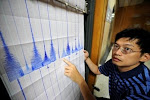
 China is deploying about 50,000 soldiers to Sichuan province after the nation's strongest earthquake in 58 years killed almost 10,000 people. "The death toll and damage are more serious than we expected and we need more people here to help,'' Prime Minister Wen Jiabao said today at disaster relief headquarters in the town of Dujiangyan near the epicenter, in comments broadcast on state television.The 7.9 magnitude earthquake struck 90 kilometers (56 miles) from the central city of Chengdu, home to 11 million people and the capital of Sichuan province. There's no contact from the city of Wenchuan, which has a population of 118,000 and is 14 kilometers from the epicenter, state-run Xinhua News Agency said.The quake, at 10 kilometers below the surface, was shallow,"which means it released more destructive energy,'' Zhang Guomin, a researcher at the China Seismology Bureau, told Xinhua."We have to guard against mudslides and collapsing buildings.'' The military is airlifting 27,000 personnel, including 3,000 members of the special forces, to join about 20,000 soldiers already in the disaster area, state TV reported. Rain and blocked roads hampered troop movements. China allocated 200 million yuan ($28.6 million) for disaster relief, Xinhua said.
Emergency Meeting
Prime Minister Wen, who flew to the disaster zone yesterday, ordered rescue workers to open roads to Wenchuan and other areas by midnight today, Xinhua said.He spoke after an emergency meeting at 7 a.m.Sichuan and surrounding areas are among the most populous in the country, while the province has 40 percent of China's gas deposits and its largest panda reserve.
The death toll, revised higher several times yesterday, is almost 10,000, Xinhua said, with as many as 5,000 killed and 10,000 injured in one county, Beichuan.Rescuers recovered at least 50 bodies from the debris of a high school in Dujiangyan, Xinhua said. As many as 900 students were buried in the rubble.Landslides buried homes and cars in debris, residents of Chengdu told Xinhua.Rescue efforts will be focused on areas"where there are older buildings that aren't well reinforced,'' Deng Changwen, spokesman for Sichuan's seismological bureau, said.
Collapsing Schools
Five other schools collapsed in the province's Deyang City, leaving an unknown number of students buried, Xinhua said.Four students were killed and at least 100 were injured when two schools collapsed in Liangping county of Chongqing municipality, adjacent to Sichuan.Chongqing is about 350 kilometers from the epicenter of the temblor.China is to host the Olympic Games in August at more than 30 venues.The frequency of earthquakes in the Beijing area was taken into account during construction, and none of the venues were damaged, Sun Weide, deputy director for the Olympic media, told Agence France-Presse.The quake sparked panic in cities and towns across Sichuan and other central provinces, Xinhua said. No damage was reported at the Three Gorges Dam, the world's largest hydroelectric dam located about 760 kilometers from the epicenter, Xinhua said.China Mobile Ltd. spokeswoman Rainie Lei and China Telecom Corp. spokesman Jacky Yung said the nation's biggest mobile and fixed-line telephone carriers were still gathering information on the situation in the quake hit areas and couldn't immediately comment on damage.
Damaging Bases
The quake damaged more than 2,000 China Mobile base stations, Vice President Sha Yuejia said yesterday, in an interview broadcast on state-run China Central Television.The Shanghai Stock Exchange said trading in Sichuan Changhong Electric Co., Chongqing Iron & Steel Co. and 43 other listed companies based in Sichuan province and Chongqing city was suspended until they provide investors with trading updates.China stocks trading in the U.S. fell to the lowest in more than two weeks yesterday, led by shares in the nation's largest insurer, China Life Insurance Co., and biggest oil producer, PetroChina Co.The quake may help fuel increases in corn and soybeans after the disaster threatened to disrupt domestic supplies, analysts said.Food prices in China already were expected to rise by an average of 10 percent or more this year as demand outpaces farm production and record global prices boost import costs, the Chinese Academy of Social Sciences said in an April 29 report.Sichuan produced about 22 percent of the nation's natural gas output in 2006, according to China National Petroleum Corp. and BP Plc's annual energy report.Chinese carriers including China Eastern Airlines Corp. halted flights to some cities hit by the quake.The quake, which struck at 2:28 p.m. yesterday, was originally reported as magnitude 7.8 before it was revised by the USGS yesterday.A magnitude-6 quake struck about 15 minutes later. The seismological bureau in Sichuan recorded more than 1,180 tremors following the quake as of 5 a.m. local time today, Xinhua said.Yesterday's earthquake was the world's strongest since an 8.5-magnitude temblor struck Indonesia in September, according to the USGS. It was the biggest to hit China since a magnitude- 8.6 quake struck Tibet in 1950, killing 1,526 people. A 7.5- magnitude quake killed 250,000 people in northeastern China's Tangshan in 1976.
http://www.bloomberg.com/apps/news?pid=20601087&sid=aDhKIjHLqZ6o&refer=worldwide
As in the days of Noah...


No comments:
Post a Comment